Deploying Claude in the Organization for Heavy Document Work
For some organizations the work is long documents, not short questions: tenders, contracts, regulation, incident reviews. That is where most tools break, not because they are weak but because they were not built for length and precision. This service builds an organizational workspace that reads a full document, points to the source an answer rests on, and connects to internal systems with defined permissions.
Instructor
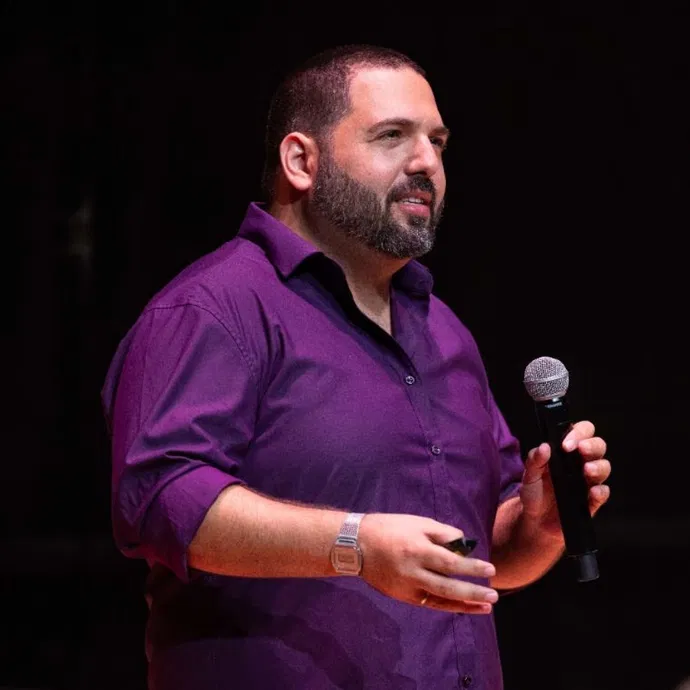
Ben Rotenberg
Chat wizard and automation magician, with vast experience in workshops and lectures on artificial intelligence for all types of organizations.
Four patterns repeat in almost every organization working with heavy documents. The document that does not fit: users split a long document into parts, and the answer misses precisely what was in the earlier section. An answer with no source: the phrasing is convincing, but nobody knows which clause it rests on, and in a contract or a regulatory filing that is the difference between useful and dangerous. Everyone with their own context: the same task produces a different result from each employee, because each one re-explains who the organization is and how things work here. Disconnected from the systems: the data lives in the CRM and shared drives, and the tool asks people to copy it in by hand.
The process starts with mapping the heavy tasks: exactly where document length and precision are worth money. Usually that means tender responses, regulatory answers, contract review and incident investigations. After mapping we build Projects for each process, dedicated workspaces holding the organization's procedures, documents and rules. Teams start from an institutional template rather than a blank page, and nobody reinvents the context on every request.
Next comes connecting to systems through MCP. MCP is an open standard that links AI tools to data sources and systems. In practice it means employees reach live data instead of copying and pasting into a chat, with defined permissions setting exactly what is accessible. The result is both higher accuracy and real traceability.
On top of all this we build verification you can rely on: a mechanism that checks output against the sources, and defined points where a human review is required before moving on. That is what turns one employee's personal experiment into a business process a manager is willing to sign off on.
Worth stating plainly: we are not tied to a single vendor. In practice many organizations run more than one tool, one for everyday tasks and one for heavy document work that demands careful drafting. We help map which task belongs to which tool instead of forcing one solution onto everything.
This direction is worth examining if at least two of these apply to you: the work rests on long documents more than short messages; the content is sensitive and requires pointing to a source; tasks require cross-referencing several documents; you bought enterprise licenses and see low utilization; or you need system connectivity without opening overly broad access.
Frequently Asked Questions
Why Claude specifically and not ChatGPT or Gemini?↓
What is MCP and why does it matter for us?↓
Does our data stay with us?↓
Instructor
Ben Rotenberg
Chat wizard and automation magician, with vast experience in workshops and lectures on artificial intelligence for all types of organizations.