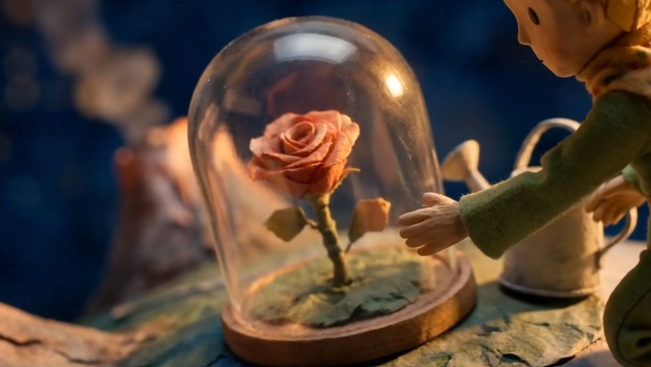
Ilan Bouni, VFX supervisor and creative AI lecturer with decades of film production experience, published an experiment that raises a genuine question. He took Seedance 2, an AI video generation tool, on a short journey with The Little Prince. The goal was to recreate the first frame from memory while merging the original drawings into a world of papier mache and stop-frame aesthetics. The result, in his words, is magical. But the question that followed is less comfortable: is the human soul still present?
What Can Seedance 2 Do That Previous Tools Could Not?
Seedance 2 marks a new generation of AI video tools capable of simulating not just visual style in general but specific textures that previously required real physical craftsmanship. Bouni made a deliberate choice in selecting papier mache and stop-motion, two of the most demanding styles to produce because they require physical touch and meticulous slowness. The fact that AI can now simulate them is a genuine shift in the boundaries of what is possible.
Are Animators at Risk?
Bouni does not give a simple answer, and rightly so. The tools are advancing at a pace that makes the question difficult to settle. On one side, AI reduces the gap between idea and execution to just a few hours of work. On the other, the questions of who directed, who chose, and who asked the right question remain entirely human ones.
What is clear is that an animator who does not use AI will be less competitive than one who does.
The Little Prince as a Test Case for Limits
Bouni's choice of The Little Prince is not accidental. Culturally resonant works with familiar emotional and aesthetic depth are the ideal testing ground for creative AI tools, precisely because everyone already knows what right should look like. When AI successfully recreates a frame from memory, that is not only a technical achievement. It is also a question about what we consider faithful to the original.
What This Means for Creative Professionals
Video, animation, and design professionals wondering what to do with the new tools can learn from Bouni's approach. Use AI the way a director uses a crew. Assign it a specific task with a clear aesthetic direction, then ask whether the human soul is still present in the result. That is the question that transforms AI from a tool into an achievement.