
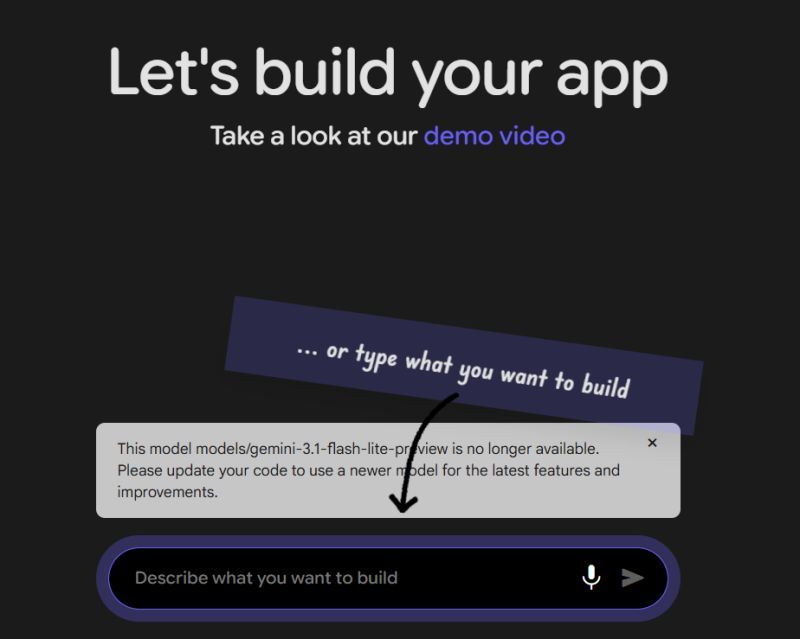
Ben Rotenberg, a Gen AI consultant who has worked with more than 80 organizations on implementation processes, shared an observation that blends humor with a serious lesson. Google's Opal platform, an internal AI tool of the company, stopped working because it was not updated from a model Google itself had deprecated. The message Google received from Google: "Please update your code to use a newer model."
What exactly happened with Opal?
Opal is a Google internal AI platform for building applications and improving workflows. Like any system built on a language model, Opal depends on a specific model version to function. When Google stopped supporting the model Opal was running on, the platform simply broke, sending the relevant team the standard message Google sends to any developer using an outdated model.
The paradox is clear: the company that produces the models forgot to update one of its own tools. This is not a criticism of Google, but a picture of a reality that every organization faces.
Why does this happen even to advanced organizations?
In many organizations, the moment an AI agent is deployed is seen as the end of the project. The team launched, the agent works, everything is fine. But AI agents are not a static tool installed once and forgotten. They depend on a full chain of dependencies, including model versions, API endpoints, permissions, and parameters that change over time.
When one of these components changes, the agent can stop working without warning. Organizations that have not built an ongoing maintenance process discover this the hard way.
What can organizations actually do?
The right approach is to build a lifecycle management framework alongside the agent deployment itself. This includes full documentation of all active agents with the model versions they are running, monitoring deprecation notices from providers, and periodic checks to verify that agents are still working as expected.
Organizations running multiple AI agents simultaneously need to treat this management as its own discipline, not as a task added as an afterthought.
What is the broader lesson?
The Opal story teaches that the trap Rotenberg describes is not limited to inexperienced organizations. It is universal. Anyone who has built an AI agent knows it can stop working for any number of reasons outside their control.
Organizations that understand AI implementation as an ongoing process rather than a one-time project are better positioned to manage these risks. And Rotenberg, who guides traditional and industrial organizations through adoption, knows firsthand the cost of missing that distinction.