
What the Builder Economy Is and Why It Is Emerging Now
Amir Shneider, a chief marketing officer and lecturer, describes a shift in his own digital consumption habits. Instead of renewing subscriptions to tools he had used for years, he now builds the same functionality himself, tailored precisely to his needs.
The shift is driven less by frugality than by a collapse in the cost of building. AI assisted coding tools have turned work that once required a development team into a task measured in hours.
Shneider calls this a move from the subscription economy to the builder economy. The economic logic underpinning subscriptions, that renting is cheaper than building, is starting to weaken.
The Example That Illustrates the Calculation
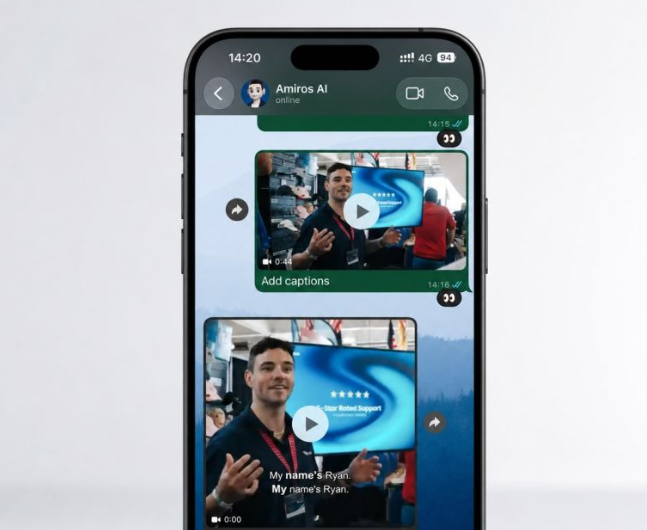
Shneider offers a concrete case: a dedicated platform for generating video captions at roughly 90 shekels a month, which amounts to about a thousand shekels a year for a single function.
Rather than renew, he built an equivalent tool matched to his requirements, accessible through WhatsApp and the working environments he already uses, with no subscription and no commitment. He describes this as one instance of a broader pattern.
Over recent months he has also built himself a teleprompter, a meeting calendar, a task management tool and a range of calculators. The cumulative saving he reports runs into thousands of shekels.
The Distinction That Determines Survival: Product or Feature
The sharpest point in Shneider's argument is that he does not classify what he replaced as software. In his view it was a skill or a feature, and therefore never justified a subscription model in the first place.
That distinction matters to every software company. A product holding proprietary data, network effects, deep integrations or regulatory compliance retains value that is hard to replicate. A product resting mainly on interface convenience around one function sits in a vulnerable position.
Shneider puts it plainly: building digital capabilities has never been easier, and the technological moat has almost disappeared.
What This Means for Marketing and Budget Owners
For marketing leaders the trend bears directly on tooling budgets. Subscription stacks in marketing departments have grown steadily, sometimes reaching dozens of tools each solving a narrow problem.
The first practical step is mapping. Identify which subscriptions serve a single function and which are wired into infrastructure that would be costly to replace. The first group is a natural candidate for reassessment.
Shneider closes with an open question about the future of subscriptions in the vibe coding era. It is worth noting the picture is not one sided, since critical systems still demand security, support and maintenance that an external vendor often delivers better than an internally built alternative.