How to Test a New Video Model Seriously
When Seedance 2.5 launched, Ella Uzan did not publish a list of impressions but one focused experiment. In her words, she made breakfast fly.
This approach is more efficient than breadth testing. A single task sitting exactly at the edge of a model's capability exposes its limits faster than ten mediocre prompts.
What the Prompt Actually Demands
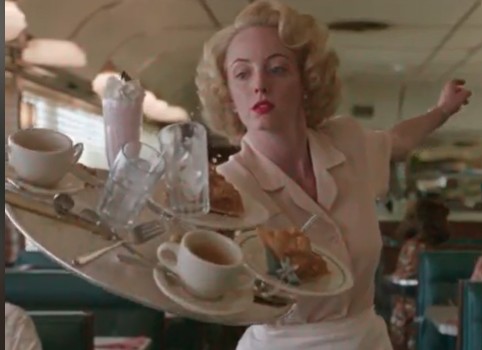
The prompt describes a single continuous shot. A waitress walks through a diner while the camera tracks beside her in slow steady lateral movement, then she suddenly loses her balance. Her arm swings up, the tray tilts and everything launches into the air with realistic momentum, including cups, plates, silverware, food and liquid.
At the peak moment time freezes completely. The waitress, every object, every splash and every droplet stay perfectly suspended. Only the camera continues moving.
Why This Is Hard for a Model
The camera pushes into the airborne objects, passes between floating droplets and spinning silverware, then performs a dramatic orbit around the frozen moment, revealing the frozen reactions of the people in the diner.
That is where the test lives. The model must simultaneously hold a total stop of every object and a smooth continuous camera move. The single shot requirement adds difficulty, because cutting is the easy way to hide inconsistency between moments.
Why Publishing the Full Prompt Changes the Value
Uzan publishes the prompt in full rather than only the result. That is a meaningful difference between a demo and a professional contribution.
An open prompt lets anyone run the same test on other models and compare under identical conditions. In a market where a new model ships every week, a shared benchmark is worth more than one expert opinion.