What did Omri Marcus demonstrate about the limits of AI empathy?
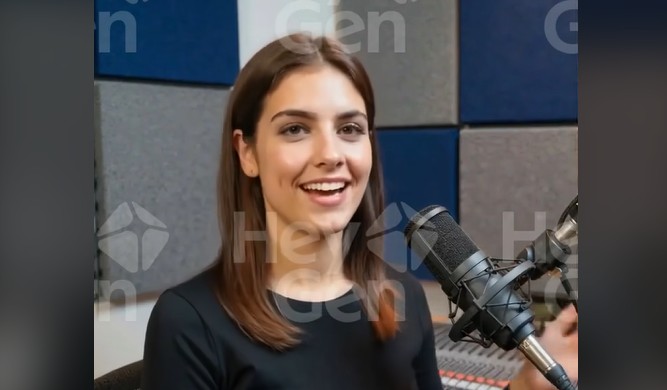
In a talk at a conference held by the Holon Institute of Technology, Omri Marcus examined how far the empathy that artificial intelligence can produce actually reaches. He did not settle for theory but ran a live demonstration in front of the audience using a video generator.
Marcus described the result as even more unsettling than he had expected. The demonstration was meant to show that an AI tool can produce a message in a perfectly acceptable tone and still miss the emotional layer the message is supposed to touch.
What was the prompt that exposed the gap?
The demonstrated prompt asked for a short script for an organizational training clip in a video avatar, aimed at employees who remained in the company after a wave of layoffs and a reorganization. The stated goal was to build organizational resilience, encourage empathy and maintain productivity, in a containing and familial tone.
Among the required points were acknowledging the emotional difficulty, a statistic about a positive attitude raising productivity, and three practical steps for the daily routine. It was precisely the attempt to wrap a painful moment in a positive, polished package that exposed how quickly synthetic empathy loses credibility.
Why does a post-layoff situation sharpen the problem?
The period right after layoffs is one of the most sensitive situations in any organization. Remaining employees carry uncertainty, and sometimes guilt, and they expect honest communication. When a message tries to manufacture a sense of family exactly when trust is fragile, every artificial note stands out immediately.
This is the boundary Marcus points to. AI can imitate the form of empathy, the right words and the professional tone, but it does not carry the human intention behind them. The gap between form and intention is what makes the result sound hollow.
What should HR teams take from the demonstration?
The practical message is not to abandon AI, but to know where to use it. The tool is excellent for producing drafts, organizing structure and first-pass wording, yet in emotionally charged communication it needs human judgment that bridges the wording and the intention.
Marcus's call to tag HR professionals reflects exactly this. For anyone crafting internal messages during hard times, the demonstration is a reminder that AI should be an assistant in the process, not the voice that speaks in place of a person in moments where trust is everything.