
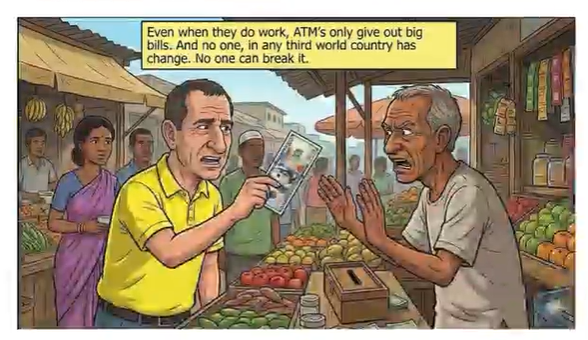
Omri Marcus is one of the few people in the world who can say he has trained Oscar and Emmy winners to integrate AI into their writing process. As founder of The Comedy Brigade and a pioneer of Agentic AI in the writers' room, he bridges two worlds that until recently seemed opposed: classic humor and artificial intelligence. His latest project, converting a humorous text by Simpsons writer Mike Reiss into a comic strip using AI, is a small but sharp example of how this technology is transforming content creation.
What Happens When a Simpsons Writer Meets AI?
Mike Reiss is not just any writer. He is one of the people who shaped the comedic language of American television over decades. When Omri Marcus took a text from his personal blog and turned it into a visual comic using AI tools, he was not just performing a technical trick. He was demonstrating a core principle of his work: AI is a tool for amplifying the human voice, not replacing it.
The project makes clear a point many organizations have yet to internalize: existing content is a massive asset. When you combine AI tools capable of converting text into visual formats, it becomes possible to extract new value from existing content, at speeds and costs that were previously unachievable.
Agentic AI in the Writers' Room: What It Means in Practice
The term Omri Marcus places at the center of his work, Agentic AI, describes a system capable of managing a complete process, not just answering a single question. In a writers' room, this means a system that can take a raw idea, develop it in multiple directions, identify what works and what does not, and help the team make faster decisions.
Someone who trains Oscar and Emmy winners to incorporate these tools into their creative process understands that the greatest challenge is not the technology itself, but the conceptual shift it requires. Skilled writers and creators need to develop a new language of collaboration with the tool, one that preserves their unique voice while significantly accelerating the process.
Content Repurposing: The Opportunity Organizations Are Missing
One of the central insights from Omri Marcus's work is that converting content between formats is one of the most immediate and practical uses of AI in the content industry. Many organizations sit on enormous volumes of written content, reports, presentations, newsletters, and internal conversations, that never reach new audiences simply because the format is wrong.
AI that can convert text into comics, transform a report into a video script, or translate a technical presentation into a post that speaks to a broader audience is not just another content tool. It is an engine for generating ROI from content that is already sitting in a drawer.
What Businesses Can Learn from the Writers' Room
The logic Omri Marcus applies when working with Hollywood writers is entirely relevant to the business world. Every organization is essentially a content studio, with departments producing knowledge, insights, and narratives on a daily basis. The question is not whether to use AI for content, but how to build a process that allows people to preserve their human voice while maintaining speed and the ability to produce at scale.
The Simpsons project shows that small, experimental, and even playful starting points are sometimes the best way to understand what AI can do for your organization. Before developing a complex strategy, it is worth asking: what existing content can we convert to a new format, right now, with the tools already available?