
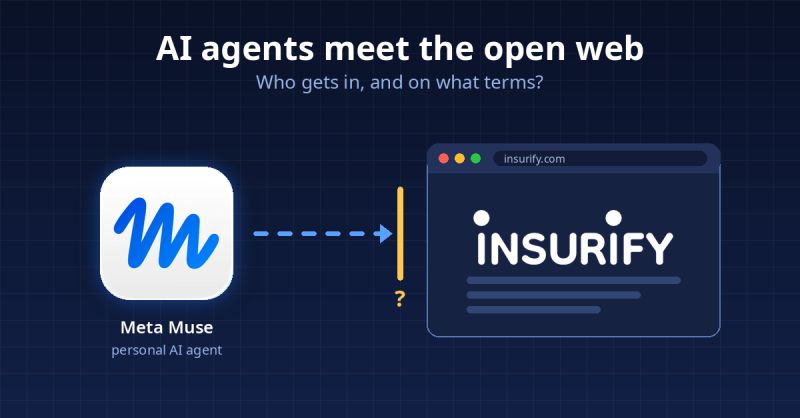
What happened between Meta Muse and Insurify
A new kind of standoff played out this week between a consumer AI agent and a commerce platform. Insurify, an insurance comparison marketplace, blocked access for Muse, Meta's personal AI agent.
Muse launched about two weeks ago with a simple promise: tell it what you need, and it goes out and does the work. The first time an agent like this tried to act on a real user's behalf against an insurance platform, it hit a locked door.
Why Insurify chose to block the agent
Insurify's reasoning holds up. An insurance quote is a binding offer, carriers pay for every quote generated, and consumers need to understand exactly what they are buying. Anyone who has worked with carriers knows these are not just excuses.
But beyond the technical justification lies a bigger story. AI agents have stopped being a demo. They are already showing up at the door of real businesses, on behalf of real customers, and every business now has to decide how to respond.
What's missing for agents to enter in an orderly way
Blocking is the tool available today, because the web was built for humans with browsers, not autonomous agents. What is missing is an entire layer: verified identity for the agent, clear user consent, defined rules for how an offer is presented, and a fair model for paying for the traffic agents generate.
The companies that build that layer first will not lose customers to agents. They will gain customers through them.
What this means for leaders and brands
Until now, the question businesses asked was whether an agent could even reach their site. The next question is on what terms it gets let in.
For anyone running a sales, marketing or digital service channel, now is the moment to start thinking about agent policy deliberately, rather than waiting for the first agent to hit a locked door.