
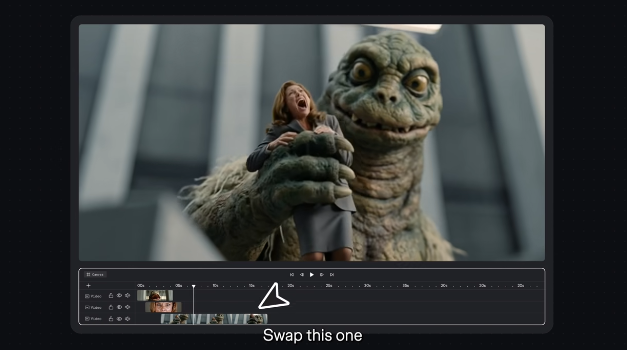
Efrat Yamin, a Creative-AI specialist with 18 years of art direction experience, responded with genuine enthusiasm to the launch of Figma Weave's new Timeline feature. For her, this is not a routine product update but a meaningful shift in how creative professionals think about their working process.
What Does Timeline Enable That Was Not Possible Before?
Until now, anyone who wanted to produce video within a design workflow had to move between tools. Design in one platform, editing in another. Figma Weave Timeline brings video rhythm directly into the canvas. You can sequence shots, layer sound, and keep iterating, all without leaving the working environment.
More than that: changing a single decision updates the entire project automatically. There is no need to manually sync every component separately.
Editing as Part of Thinking, Not the End of It
Lior Albeck, the founder behind Figma Weave, states the philosophy clearly: editing is not a stage that happens at the end but part of how you think through the work. Yamin identified exactly this point. The ability to build video rhythm in the middle of a creative process has a direct impact on the quality of decisions and the speed of execution.
What This Means for Marketing and Content Teams
Teams that still operate with a linear pipeline of design, then editing, then approval may find that competitors are already working differently. Tools that embed the editing phase into the design pipeline reduce development time and expand the space for experimentation and iteration.
Figma Weave as an Example of a Broader Trend
Timeline is part of a wider pattern: AI tools being built inside existing workflows rather than alongside them. Instead of requiring users to switch tools, these products bring new capabilities to where the user already is. For Yamin, who defines her work as turning prompts into profit, this is exactly the direction the industry needs to move.