
Why Marketing Leaders Are Living Through Their Best Era
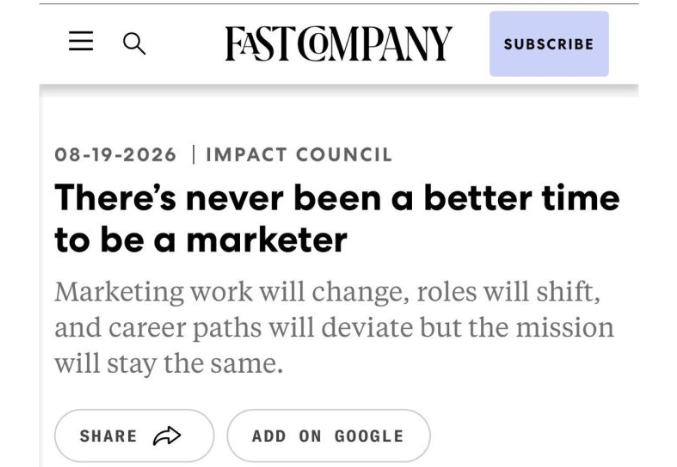
Amir Shneider, Chief Marketing Officer at Skywatch, VOOM and Toffu AI, argues that this is the best time in history to be a marketing leader. He has held that position since ChatGPT entered public use in 2022, and a recent opinion column in Fast Company supports it.
The core claim is straightforward. Marketing work is changing, roles and career paths will change, but the marketing mission itself stays the same. Leaders who internalize that distinction stop reading the shift as a threat and start reading it as an opening.
What Has Actually Changed in Marketing Work
New AI tools are rewriting familiar patterns and functioning as a significant force multiplier for marketers. In a short span, constraints and dependencies that shaped the profession for years have been lifted.
Shneider describes the shift vividly. A single marketing department becomes, almost overnight, a creative studio, a development team and a data operation, all within reach of one prompt or one agent. Work that once required budget, external vendors and long lead times is now available almost immediately.
Why Senior Marketers Are Considering a Career Change
Shneider says he meets hundreds of marketers each year, many of them senior and experienced, who view these changes with considerable anxiety and some of whom are weighing a change of profession. The concern is reasonable, because when tools shift this quickly it is hard to know which skills will hold their value.
His response is not to deny the concern but to point at the positive trends and the opportunity inside them. The shift removes far more constraints than it creates threats, particularly for those willing to learn the new tools rather than wait them out.
The Core Skill of a Marketing Leader in the Agent Era
In Shneider's view, the enduring asset is human capability, knowledge and experience applied to conducting an orchestra of agents. Not the technical operation of a tool, but the direction given to it.
That direction rests on a wide view of marketing fundamentals and on answering the foundational questions that sit beneath consumer behavior. The tools generate output at impressive speed, but deciding which question to ask and which answer is worth acting on remains human work.